
Guides
Hotel Architect Beginner Guide: First Build Order
Quick Answer
Your first Hotel Architect build should be small: reception, a short corridor, repeatable standard rooms, basic services, one real staff bottleneck, then rating fixes before expansion.
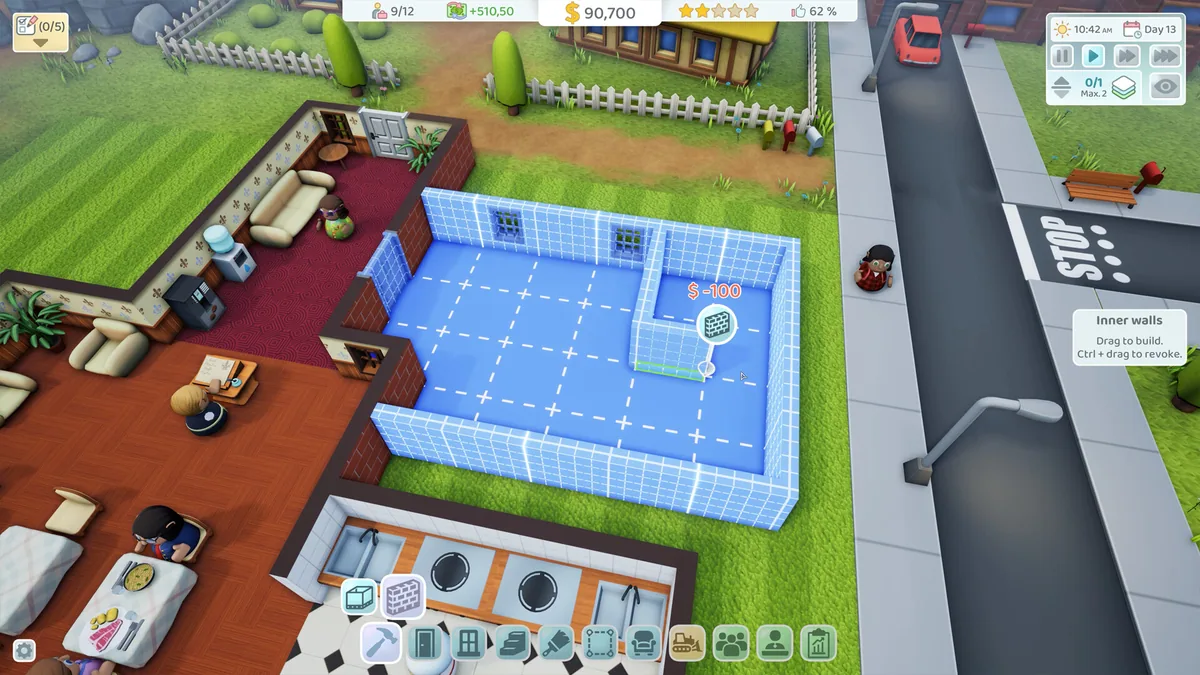
Hotel Architect Tools
Rooms, Layout, Staff, Services, and Rating Checks
Use the current hotel state, not a perfect hidden formula. Pick one room plan, diagnose one symptom, and save rating checks before adding another wing.
Room Plan Picker
Choose the closest goal, then use the output as a small build test before changing the whole floor.
Starter standard room
Repeat one compact room template until guest feedback is predictable.
- Service
- Keep reception, cleaning, and basic services close enough to see the bottleneck.
- Expand
- Duplicate only after the first set stays clean and profitable.
- Risk
- Too much decoration hides whether the room size or service route is the real problem.
Layout, Staff, and Service Diagnostic
Search the visible symptom first. The fix should name a path, room, queue, service, or staff route.
Reception queue builds up
Check:Watch whether guests are blocked by desk count, desk placement, staff timing, or entrance shape.
Fix:Shorten the entrance path first, then add desk or staff only if the route is already clean.
Do not add rooms while check-in is already backed up.Rooms stay dirty
Check:Follow the cleaner route from staff area to the farthest room.
Fix:Shorten the cleaning route or add local support before hiring blindly.
Do not assume payroll solves a hotel that is physically too stretched.Guests complain about service coverage
Check:Compare service placement against the rooms that actually complain.
Fix:Create a local support pocket near demand, then retest one guest wave.
Do not place one beautiful service room at the far edge of the hotel.Comfort stops improving
Check:Compare room size, amenities, noise, and traffic near the room.
Fix:Upgrade one standard template and keep the route calm around it.
Do not add premium furniture while noise or cleaning is still failing.Noise complaints repeat
Check:Look for service rooms, staff traffic, queues, or busy corridors beside guest rooms.
Fix:Add buffer space or move noisy support away from premium rooms.
Do not put the best rooms next to the busiest staff route.Rating improves but profit falls
Check:Separate comfort upgrades from staff and service payroll increases.
Fix:Cut the walking problem first, then keep only staff that remove a visible bottleneck.
Do not chase 5 stars with every service active before revenue is stable.Every expansion creates the same complaint
Check:Run a small test wing with the current best room, service, and staff route.
Fix:Copy the working pattern, not the old broken corridor.
Do not scale a layout that only works while you babysit it.No diagnostics match this filter.
Hotel Architect beginners should resist the big beautiful hotel. The first hotel is a test machine. It should teach guest flow, room comfort, cleaning, service demand, staffing, and expansion without costing so much that every mistake becomes permanent.
Last checked: May 30, 2026. Use the order below as a build route. Exact prices, salaries, ratings, and service requirements should be checked in your current build.
Quick Answer
| Build step | Goal |
|---|---|
| Reception | Guests can enter and check in without confusion |
| Standard room block | A few repeatable rooms earn money |
| Service space | Staff can support rooms without long walks |
| Staff hire | One bottleneck gets solved at a time |
| Rating fixes | Comfort, cleanliness, noise, and wait times improve |
| Expansion | New rooms add profit instead of chaos |
First Build Order
- Place reception near the entrance.
- Build one short corridor.
- Add a small set of standard rooms.
- Reserve space for services before using every tile.
- Open and watch the first guest complaints.
- Hire only for a visible bottleneck.
- Improve the room or service that blocks ratings.
- Expand one wing, not the whole property.
First Hotel Blueprint
| Zone | Place it | Why it works |
|---|---|---|
| Reception | Near the front entrance with a short approach | Guests should not get confused before the hotel starts earning |
| Standard rooms | In one repeatable block | Repeated rooms make complaints easier to diagnose |
| Service support | Close to the rooms it supports | Staff travel is often the hidden cost |
| Expansion space | At the end of the corridor or a second wing | You need a clean place to grow later |
| Noise buffer | Between service traffic and guest sleep areas | Comfort problems are easier to prevent than fix |
Keep the first blueprint boring on purpose. A simple hotel teaches the economy faster than a landmark building with unclear routes.
Early Bottlenecks
| Problem | Likely cause | Fix first |
|---|---|---|
| Guests wait | Reception or pathing | Improve front flow before adding rooms |
| Rooms stay dirty | Cleaning path or staff | Shorten route or hire carefully |
| Guests complain about comfort | Room size, furniture, noise, amenities | Upgrade one room template |
| Money drops | Too much build cost or payroll | Stop expansion and stabilize occupancy |
| Services feel far | Layout spacing | Move or add local support |
Troubleshooting Flow
| If the save feels bad… | Check first | Then try |
|---|---|---|
| Money falls every day | Build cost, payroll, empty rooms | Pause expansion and make the current rooms earn |
| Guest ratings do not move | Repeated complaint type | Fix one room template or service route |
| Staff never catch up | Walking distance | Move support rooms before hiring again |
| Reception queue grows | Entrance and front desk flow | Add staff only if the path is already clear |
| New wing makes things worse | Old service plan stretched too far | Give the wing its own support route |
Do not rebuild the entire hotel after one complaint. Watch the same problem happen twice, then change the smallest piece that could fix it.
Save-Safe Test Route
Before a major rebuild, make a test save or separate branch of the current hotel:
- Save before the rebuild.
- Change one layout section only.
- Run enough guest flow to see reception, cleaning, and service behavior.
- Compare complaints and profit against the old state.
- Keep the change only if it fixes the named problem.
This is faster than chasing a perfect layout from memory. Hotel Architect rewards controlled experiments.
Expansion Rule
Do not expand because the hotel looks small. Expand because the current layout is profitable and the next wing has a job. A good expansion has a reason: more standard rooms near existing services, premium rooms after demand rises, or a new service cluster that supports a clear guest group.
Expansion Gate
| Gate | Expand if… | Wait if… |
|---|---|---|
| Reception | Guests enter and check in cleanly | The first queue already causes complaints |
| Rooms | Current room template earns reliably | Room comfort complaints repeat |
| Cleaning | Rooms reset before the next guest wave | Dirty rooms stay dirty too long |
| Services | Support rooms are close to demand | Staff cross the hotel for every task |
| Profit | Cash supports build cost and payroll | Payroll rises faster than revenue |
When all five gates look stable, add a small wing. If one gate is failing, fix that gate before adding more rooms.
Next Pages To Open
- Hotel Architect Layout Guide
- Hotel Architect Room Size Guide
- Hotel Architect Staff and Services
- Hotel Architect Hub
Sources
FAQ
How should beginners start Hotel Architect?
Build a compact hotel core with reception, a few standard rooms, basic service access, and one controlled expansion path.
Should I hire lots of staff early?
No. Hire when a repeated task is late, not before you know what the bottleneck is.
When should I expand?
Expand after the current hotel is profitable, clean, and free of obvious guest-flow or staff-flow problems.